Introduction
The development of advanced ceramic materials has transformed industries ranging from aerospace and electronics to healthcare and manufacturing. Traditional ceramics are valued for their hardness, heat resistance, and chemical stability, but they often face limitations such as brittleness and low fracture toughness. Modern material science has introduced innovative solutions to overcome these challenges, and one of the most promising approaches is the integration of nano-sized additives. Among these materials, nano Al2O3 in ceramics has gained significant attention because of its ability to enhance mechanical properties, improve structural performance, and support the production of high-performance ceramic components.
Aluminum oxide, commonly known as alumina or Al2O3, has been widely used in ceramic manufacturing for decades. However, reducing alumina particles to the nanoscale creates unique characteristics, including increased surface area, improved particle interaction, and enhanced reinforcement effects. These advantages allow manufacturers and researchers to develop ceramics with better strength, wear resistance, thermal stability, and functional performance.
As industries demand lighter, stronger, and more reliable materials, the role of nanotechnology in ceramic engineering continues to expand. Understanding how nano Al2O3 contributes to ceramic improvement helps manufacturers select suitable materials for advanced applications.
Understanding Nano Al2O3 and Its Role in Ceramic Materials
What Is Nano Al2O3?
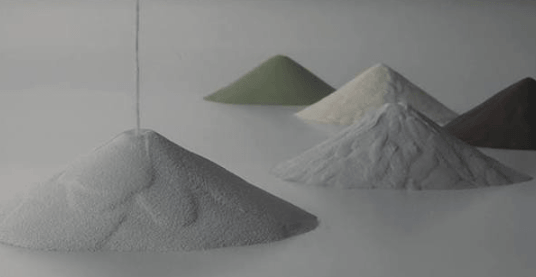
Nano Al2O3 refers to aluminum oxide particles engineered at the nanometer scale, typically measuring between 1 and 100 nanometers. At this extremely small size, the material exhibits properties that differ from conventional alumina powders.
The large surface area of nanoparticles allows stronger interactions between particles and ceramic matrices. This characteristic makes nano alumina an effective reinforcing material when incorporated into ceramic structures.
Unlike traditional ceramic additives, nano-sized alumina can influence the microstructure of ceramics during processing. It helps control grain growth, improve density, and create a more uniform internal structure.
Why Is Nano Alumina Important for Ceramics?
Ceramic materials are naturally hard and resistant to extreme environments, but their brittleness limits their use in applications requiring impact resistance. Adding nano Al2O3 can help address these weaknesses by strengthening the ceramic structure.
The nanoscale particles act as reinforcement points within the ceramic matrix. They reduce defects, improve bonding between particles, and contribute to better overall material performance.
Researchers and manufacturers increasingly explore the use of nano Al2O3 in ceramics because it provides a pathway toward producing stronger and more reliable ceramic products without significantly increasing weight.
Benefits of Using Nano Al2O3 in Ceramic Manufacturing
Improved Mechanical Strength
One of the main advantages of nano alumina is its ability to increase ceramic strength. The nanoparticles distribute evenly throughout the ceramic matrix, creating reinforcement zones that help resist external forces.
Improved tensile strength, compressive strength, and fracture resistance make nano-enhanced ceramics suitable for demanding applications where conventional ceramics may fail.
Enhanced Hardness and Wear Resistance
Ceramics are often selected because of their excellent hardness. The addition of nano Al2O3 further improves surface durability and resistance to abrasion.
This property is especially valuable for components exposed to friction, mechanical stress, or continuous operation. Industrial parts, cutting tools, and protective coatings can benefit from improved wear performance.
Better Thermal Stability
Alumina is already known for its high-temperature resistance. Nano Al2O3 enhances this advantage by improving structural stability under extreme thermal conditions.
Ceramics containing nano alumina can maintain their mechanical integrity when exposed to rapid temperature changes or prolonged heating, making them suitable for high-temperature engineering environments.
Improved Microstructure Control
The performance of ceramic materials depends heavily on their internal structure. Uneven grain growth and microscopic defects can reduce strength and reliability.
Nano Al2O3 helps regulate grain size during ceramic processing. Smaller and more uniform grains contribute to improved mechanical properties and greater consistency in final products.
Manufacturing Approaches Using Nano Al2O3
Powder Mixing and Sintering
One common method involves mixing nano alumina powder with ceramic materials before sintering. During sintering, heat and pressure help transform the mixture into a dense ceramic structure.
The presence of nanoparticles influences the sintering process by improving particle bonding and reducing structural weaknesses.
Composite Ceramic Development
Nano Al2O3 is frequently combined with other ceramic materials to create advanced composites. These combinations allow engineers to achieve specific performance characteristics based on application requirements.
For example, ceramic composites may be designed to provide improved toughness, electrical properties, or resistance against environmental damage.
Surface Modification Techniques
In some applications, nano alumina particles are modified or treated to improve compatibility with ceramic matrices. Surface modification improves particle distribution and prevents unwanted aggregation.
This approach allows manufacturers to achieve more consistent results and optimize ceramic performance.
Applications of Nano Al2O3 Enhanced Ceramics
Electronics and Electrical Components
Advanced ceramics are widely used in electronics because of their excellent insulation properties and thermal resistance. Nano alumina-enhanced ceramics can improve the reliability of electronic substrates, insulating components, and heat management systems.
The improved strength and stability help electronic devices operate efficiently under demanding conditions.
Biomedical Applications
Ceramics are important materials in medical technology, particularly for implants and dental applications. Their biocompatibility and durability make them suitable for long-term use inside the human body.
Nano Al2O3 can improve mechanical performance while maintaining the desirable properties of ceramic biomedical materials.
Aerospace and Defense Industries
Aerospace applications require materials capable of handling extreme temperatures, mechanical stress, and harsh environments. Nano-reinforced ceramics offer improved reliability for components exposed to demanding operating conditions.
Lightweight ceramic materials with enhanced strength are valuable for improving efficiency and performance in aerospace engineering.
Industrial Wear Components
Manufacturing industries use ceramics for parts exposed to friction and mechanical impact. Nano Al2O3 improves resistance against surface damage, extending component lifespan and reducing maintenance requirements.
Industries can explore specialized materials such as nano Al2O3 in ceramics to develop solutions for high-performance ceramic applications.
Challenges in Using Nano Al2O3
Although nano alumina provides many advantages, manufacturers must address several challenges. One major issue is nanoparticle dispersion. If particles gather together instead of spreading evenly, the expected improvements may not be achieved.
Processing costs can also be higher compared with conventional ceramic materials because nanoscale powders require specialized handling and manufacturing techniques.
Researchers continue to improve production methods to make nano-enhanced ceramics more practical and cost-effective for large-scale applications.
See also: Beyond Screens: The Invisible Tech Powering Your Daily Life
Future Developments of Nano Alumina Ceramics
The future of nano Al2O3 in ceramic technology is closely connected with advancements in nanotechnology and material engineering. Researchers are exploring new methods to improve particle distribution, reduce manufacturing costs, and develop multifunctional ceramic materials.
Emerging applications in renewable energy, advanced electronics, and smart manufacturing are expected to increase demand for high-performance ceramics.
As industries continue searching for materials with superior strength, durability, and resistance, nano alumina will remain an important component in next-generation ceramic development.
FAQs
1. What is nano Al2O3 used for in ceramics?
Nano Al2O3 is used to improve ceramic properties such as strength, hardness, thermal resistance, and wear performance. It acts as a reinforcing material that enhances the overall quality of ceramic products.
2. How does nano alumina improve ceramic strength?
Nano alumina improves strength by filling structural gaps, controlling grain growth, and creating stronger interactions within the ceramic matrix. This reduces weaknesses and improves resistance to mechanical stress.
3. Are nano Al2O3 ceramics suitable for industrial applications?
Yes, nano Al2O3 ceramics are suitable for many industrial applications, including electronics, aerospace components, biomedical materials, and wear-resistant machine parts due to their enhanced durability and stability.
Conclusion
Nano Al2O3 has become an important material for advancing ceramic technology by improving strength, durability, thermal stability, and structural performance. Its nanoscale characteristics allow manufacturers to overcome some limitations of traditional ceramics and create materials suitable for demanding modern applications.
From electronics and healthcare to aerospace and industrial engineering, nano-enhanced ceramics continue to provide valuable solutions for high-performance requirements. As research and manufacturing techniques develop further, the use of nano Al2O3 in ceramics is expected to expand, supporting the creation of stronger, more reliable, and more efficient ceramic materials.